AI is rapidly altering the landscape
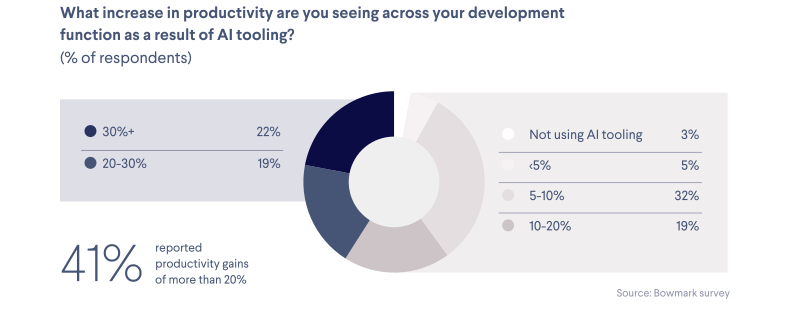
AI is redefining software. Foundational model providers are building specialist applications, previously the preserve of SaaS businesses, while generative AI tooling is accelerating software development – with 41% of attendees reporting productivity gains of more than 20%. Agentic AI can now orchestrate complex enterprise workflows, while pricing is evolving beyond per-seat models.
The battleground, however, extends beyond features and pricing. The value of enterprise software also encompasses configuration, implementation, support, compliance and continuous development to meet customer needs.
Established players are well-positioned – but must act
Incumbent SaaS providers have key structural advantages centred on customer trust, embedded workflows, proprietary data, domain expertise and distribution.
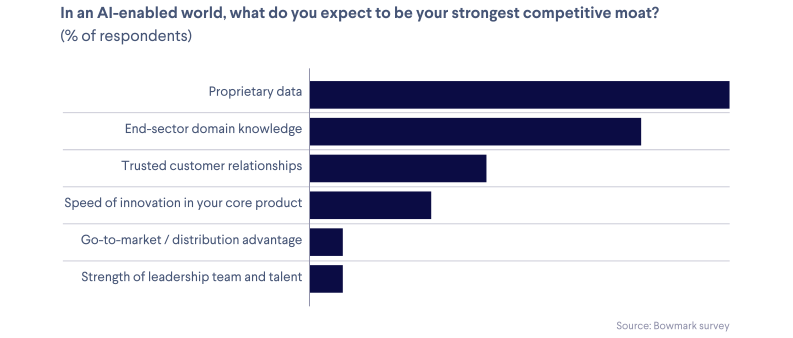
As Clement Andre, Digital Native GTM Leader at OpenAI in EMEA, noted, platforms that are deeply integrated into customer workflows, with truly proprietary data and exposure to compliance-driven sectors, are particularly well-positioned to benefit from AI.
But advantage is not entitlement. Those that decisively embed AI can build durable competitive advantage; those that hesitate risk being outmanoeuvred by nimbler, AI-native insurgents.
Conversely, software platforms reliant on repeatable functional logic, with low switching costs or highly-standardised processes differentiated largely by UI, are more exposed to disintermediation.
Focused investment in data, operations and product is critical
Incumbency alone is insufficient. Future success will require targeted investment and decisive leadership in five areas.
1. Technology architecture
Strong data foundations are essential. A unified data layer is critical to capture, transform and govern closed-loop proprietary data reliably. Discipline around governance and security is also non-negotiable to ensure consistently accurate outputs.
2. Lower cost-to-serve
Leaders should re-assess every function to understand how AI can improve operating leverage – by accelerating customer onboarding, enhancing service and driving proactive cross-sell.
3. Product development
The opportunity extends beyond automation. As spend shifts from people-based to AI-based activity, software businesses can access new revenue potential by re-imagining how customers derive value – including helping them achieve efficiency gains. Product development must be agile: double down on what works; promptly stop what does not.
4. Commercial innovation
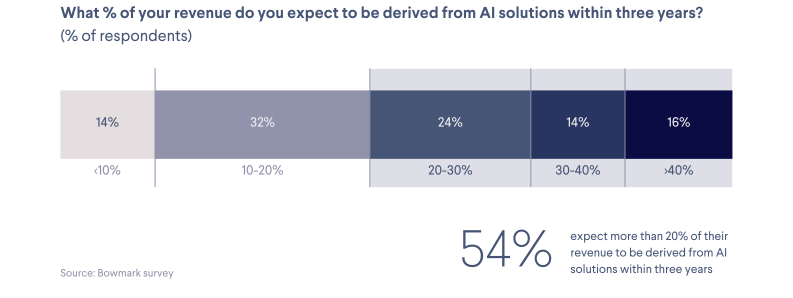
Pricing is evolving beyond per-seat economics. Michael Briest, Managing Director and Head of European Technology Research at UBS, observed that AI offers significant monetisation potential for businesses that deliver measurable customer outcomes – with 54% of attendees expecting over 20% of their revenue to be AI-related within three years.
5. Talent
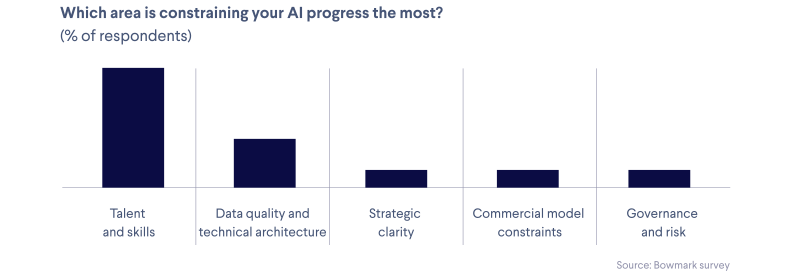
AI touches the entire organisation. Securing and retaining specialist talent is the single biggest success factor.
AI presents a transformational opportunity
Like prior disruptions – the PC, the internet, cloud and SaaS – AI will reward speed, disciplined execution, and system-wide thinking anchored in long-term customer value.
Encouragingly, 95% of attendees perceive AI to be of benefit to their core product.
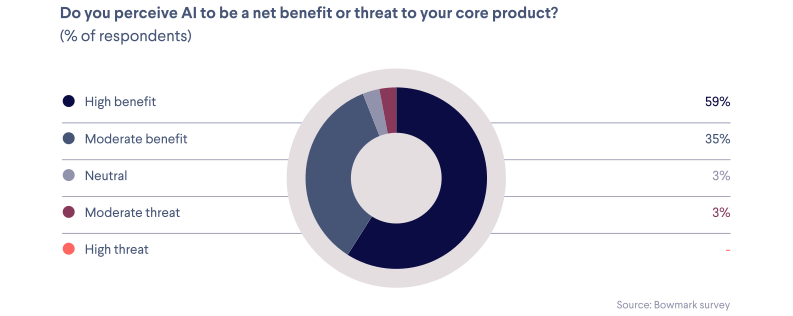
For incumbent software providers, the opportunity is clear: build on your existing advantage, embed AI decisively, and embrace self-disruption to deliver sustainable growth.

Words by Tom Keen
Mar 12, 2026
In the news
1 September 2026
Bowmark and PiP celebrate 10 years of partnership
Read more
17 August 2026
Bowmark Capital invests in leading events, media and intelligence platform InfraXmedia
Read more
23 July 2026
Bowmark Capital invests in SFG20, the UK industry standard for building maintenance specification
Read more